 EN
EN  IT
IT Museo Galileo
MIRABILIA GRAPHICA
Micrographic Calligrams of Ignazio Muligino
Curated by Filippo Camerota
A project by Museo Galileo
With the support of Fondazione Cassa di Risparmio di Firenze
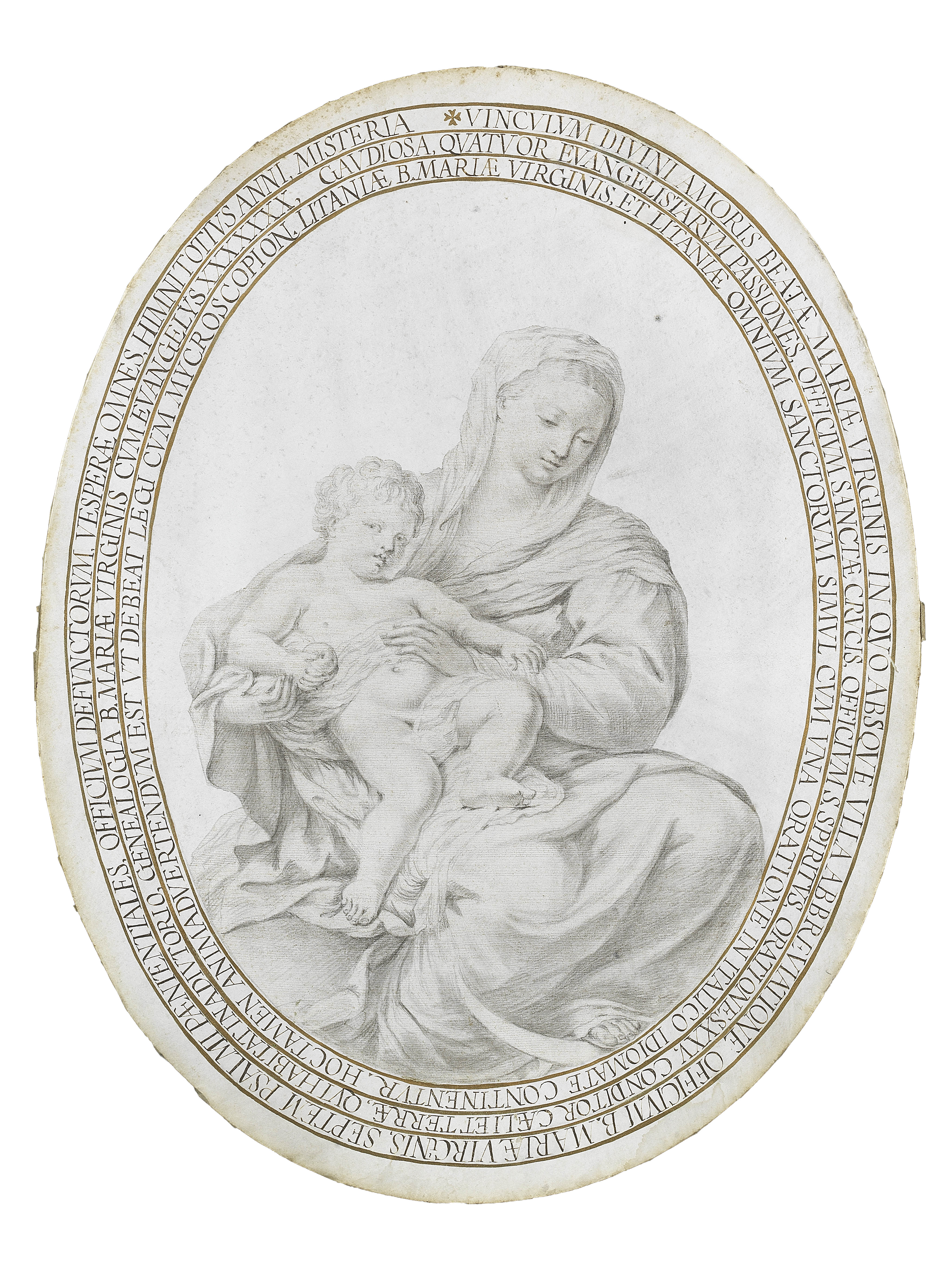
The exhibition is dedicated to a highly original work: a calligram that exploits the properties of the microscope to allow the reading of a text nearly invisible and illegible to the naked eye. The script composes a Madonna and Child derived from a painting by Pietro da Cortona now in the Louvre, Saint Martina with the Virgin and Child (1643). The author is Francesco Ignazio Muligino, a calligrapher active between France and Italy at the end of the 17th century, who mastered the use of optical science in support of his art.
His works fall among what the culture of his time referred to as ‘mirabilia graphica’ and acquire particular value due to their connection with the early spread of the microscope. Perfected and made famous by Galileo Galilei, the instrument fostered the development of naturalistic studies by the Accademia dei Lincei, beginning with the study of bees that the Academy’s founder, Federico Cesi, dedicated to Pope Urban VIII Barberini.
Muligino’s calligram is a rarity made even more intriguing by a technical riddle yet to be unravelled: namely, what unprecedented “nib” allowed the author to transcribe an entire book—the Officium Beatae Mariae Virginis—onto the figures of the Child and the Virgin, within a space of approximately 30×20 cm.
In addition to the Madonna and Child, three more calligrams by Muligino are on display, together with other precious original works: Federico Cesi’s Apiarium and Matthäus Greuter’s Melissographia, an 18th-century edition of the Officium Beatae Mariae Virginis, Chérubin d’Orléans’ La dioptrique oculaire (1671), and a selection of microscopes and optical devices from the 17th and 18th centuries.
A touchscreen station allows visitors to explore the Madonna and Child in every detail, offering the possibility to zoom in and decipher the micrographic text that shapes the image.
STARTS IN
Highlights

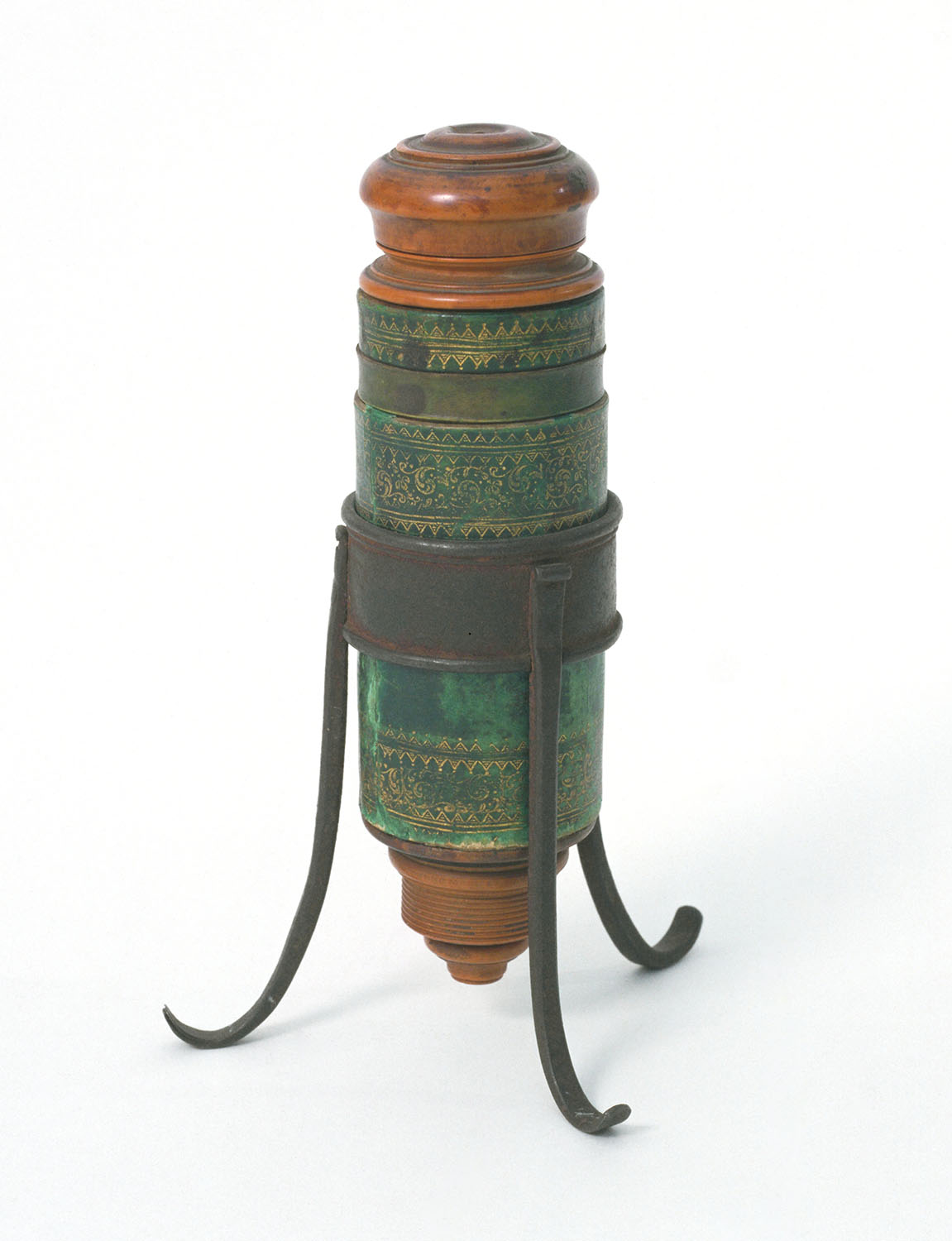
Compound microscope
Giuseppe Campani was a celebrated maker of nocturnal clocks, though he earned renown for his high-quality telescopes and compound microscopes as well. Unlike Galileo Galilei’s occhialino—which utilized two lenses (one concave and one convex)—Campani’s microscope features three convex lenses. Focusing is achieved by sliding the tube or by rotating the body within its tripod to adjust the height. The instrument provides 12x magnification.

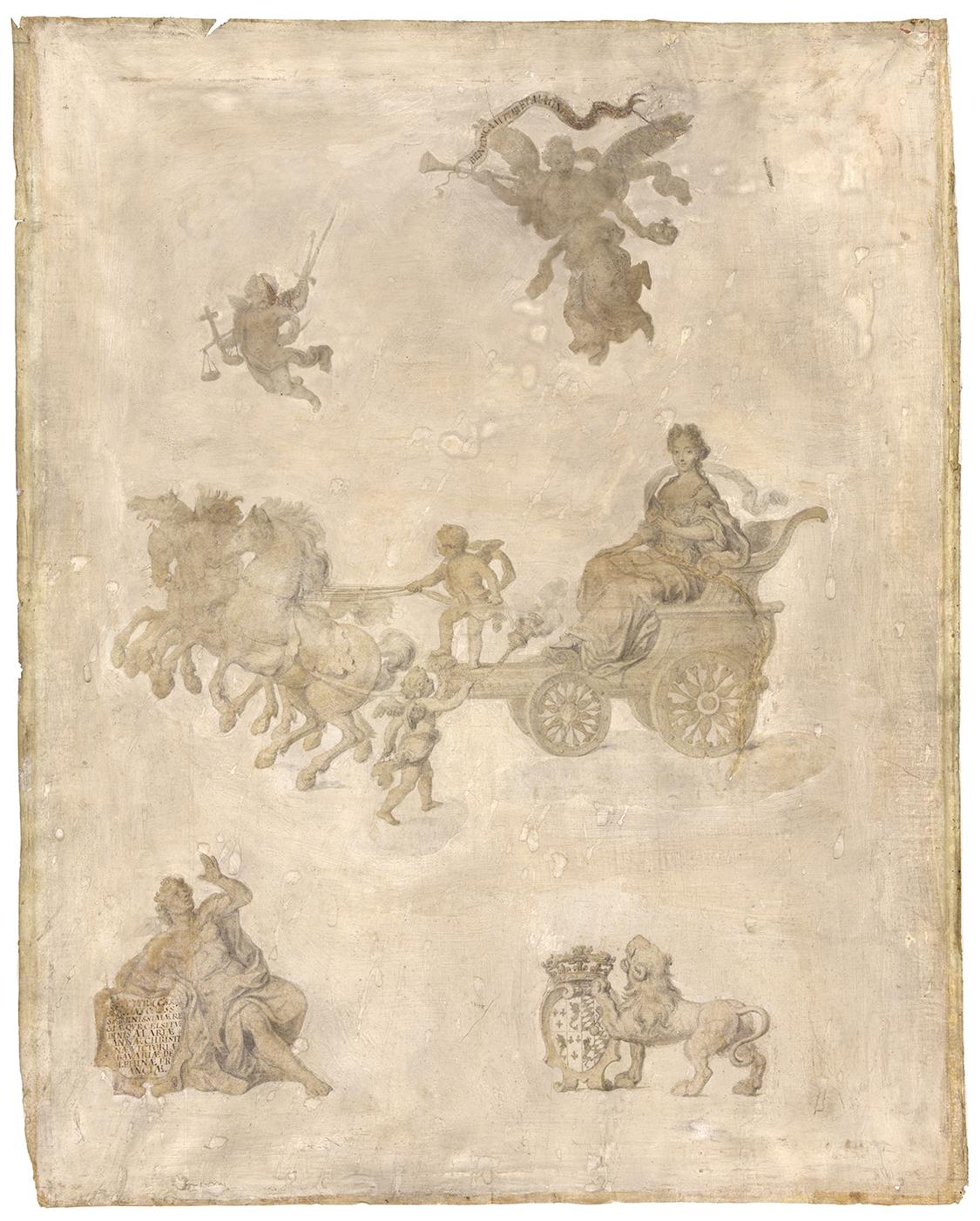
Il Trionfo d’applausi, e di glorie figurato di purissime lettere di sua altezza reale Maria Anna Christina Vittoria di Baviera Delfina di Francia, nel quale si contengono li seguenti versi, da leggersi nella figura con il microscopion
Ignazio Francesco Muligino (17th-18th century)
Drawing possibly by Pierre Mignard (1610-1695)
Paris, c. 1687-1689
San Marino, California, The Huntington Library, mss HM 84368
Facsimile
This drawing honours Maria Anna Christina Victoria of Bavaria, who joined the French court in 1680 upon her marriage to Louis, the Grand Dauphin and son of Louis XIV. The scene depicts a triumphal chariot surrounded by allegorical figures, which are entirely composed of verses from an Italian poem by Ignazio Francesco Muligino—legible only under a microscope. A similar calligram was created for Louis XIV in 1686 (Bibliothèque nationale de France, Italien 496).

Madonna and Child
Ignazio Francesco Muligino (17th-18th century)
Milan, 1692
Rome, Diego Costantini Collection
As the inscription states, the calligram contains psalms and prayers to be read under a microscope: ‘The bond of divine love of the Blessed Virgin Mary, in which one may read, without any abridgement, the Office of the Blessed Virgin Mary, seven penitential psalms, the Office of the Dead, […] the Litany of the Blessed Virgin Mary and the Litany of All Saints, together with a prayer in the Italian language. It should be noted that it must be read with a microscope’. The drawing is based on a painting by Pietro da Cortona through an engraving by François Spierre. The micro-script is made of characters measuring a mere quarter of a millimetre.

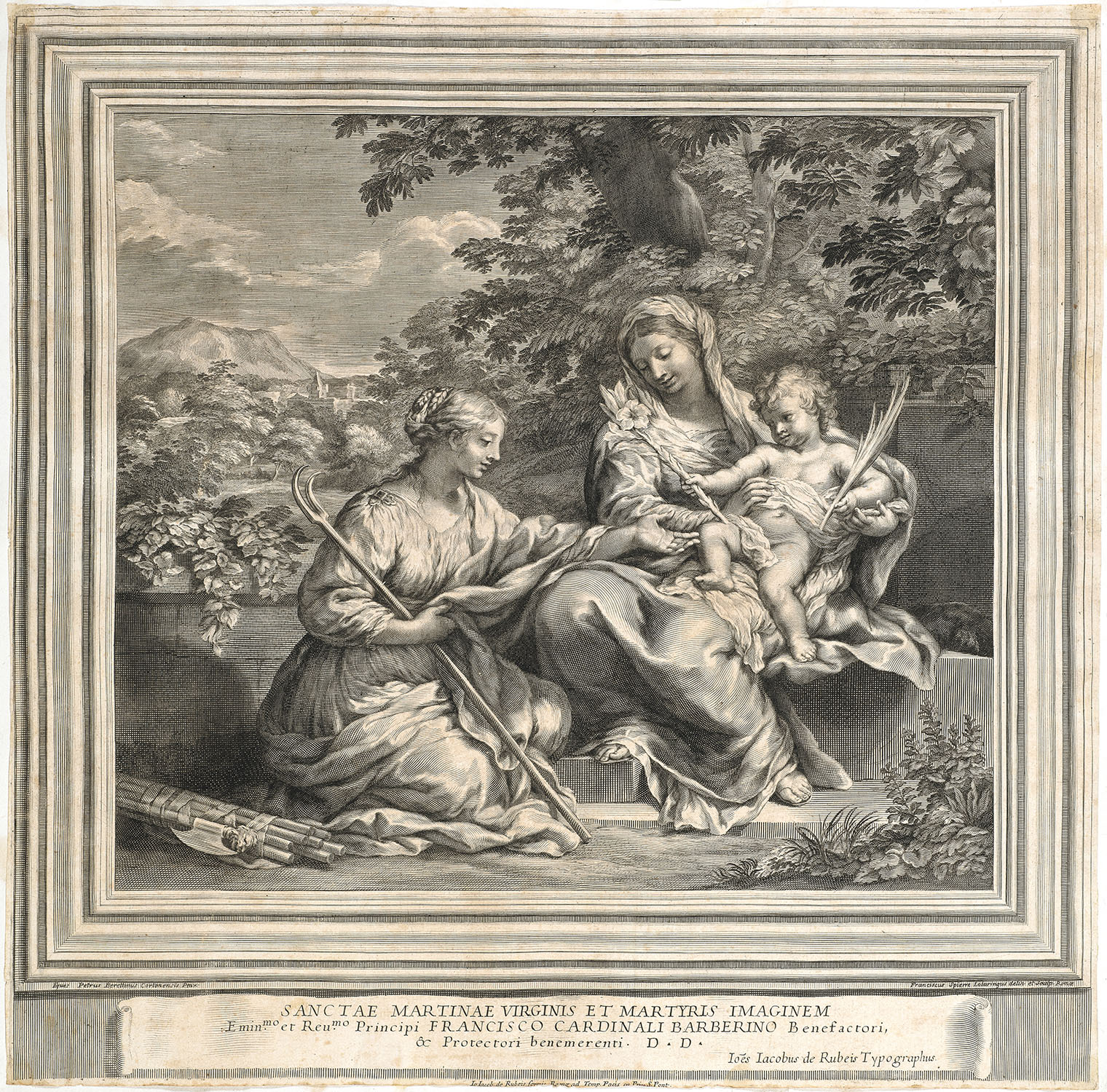
Saint Martina with the Virgin and Child
François Spierre (1639-1681)
1660-1663
Rome, Istituto Centrale per la Grafica, inv. S-FC69117
Facsimile
Shortly after arriving in Rome in 1660, François Spierre was commissioned to engrave Pietro da Cortona’s Saint Martina with the Virgin and Child. Considered one of his masterpieces by Pierre-Jean Mariette, this print represents the pinnacle of Spierre’s collaboration with Roman Baroque masters such as Cortona and Bernini. It features a dedication from the printer De Rossi to Cardinal Francesco Barberini, serving as both a political and cultural tribute.

Immaculate Conception
Ignazio Francesco Muligino (17th-18th century)
Florence (?), 1702
Paris, Private Collection
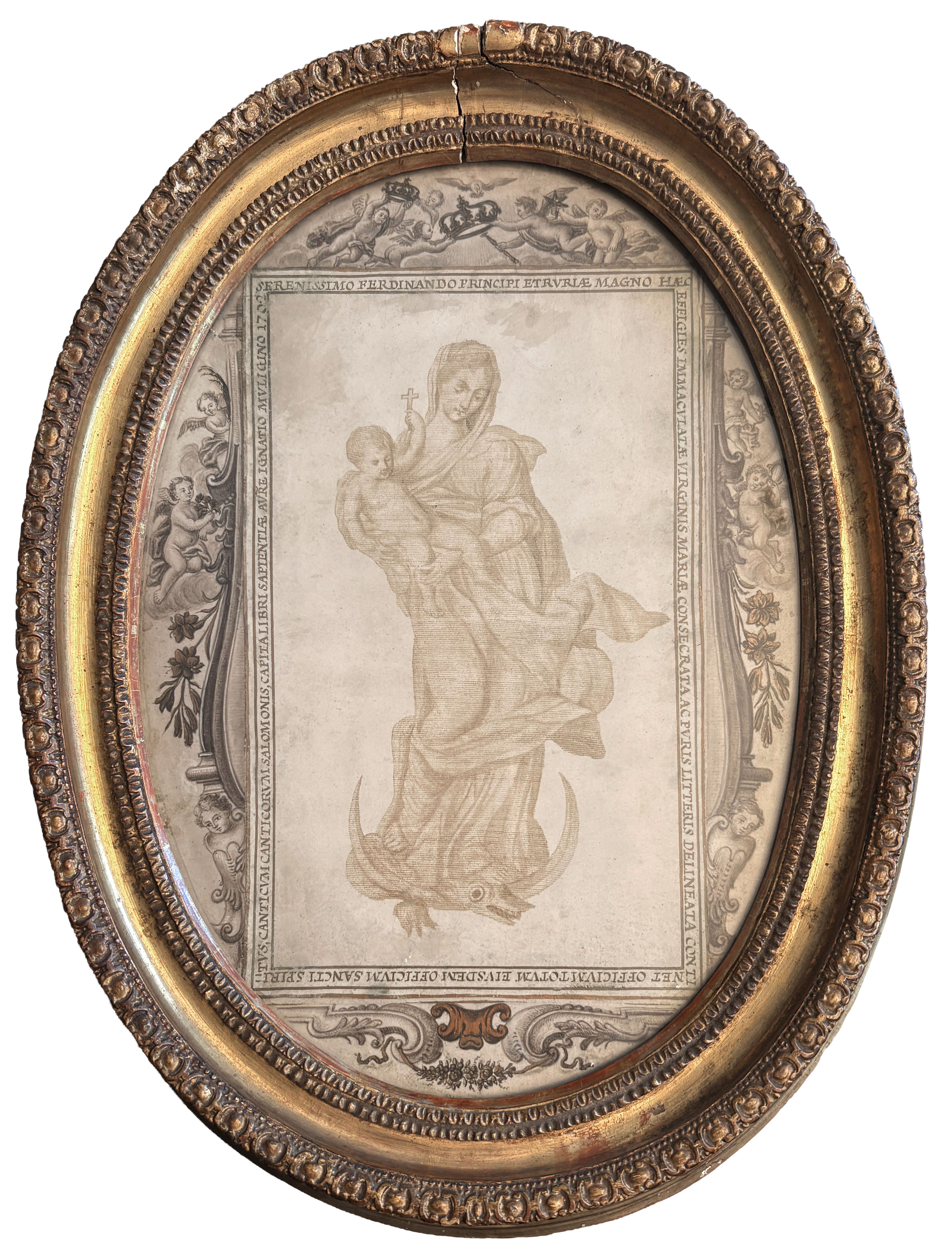
The calligram is dedicated to Grand Prince Ferdinando de’ Medici, a renowned patron of the arts and sciences. It is signed by Ignazio Muligino, who created it in 1702, likely in Florence. As the inscription bordering the drawing states, ‘this image of the Immaculate Virgin Mary, consecrated and outlined with pure letters, incorporates the full Office of the Virgin Mary, the Office of the Holy Spirit, King Solomon’s Song of Songs and several chapters of the Book of Wisdom’; in essence, the entire content of the Officium Beatae Mariae Virginis. The drawing is based on Carlo Maratti’s Immaculate Conception for the De Sylva chapel in Sant’Isidoro, Rome—a masterpiece Muligino likely knew through an engraving by Maratti himself.

Immaculate Conception
Carlo Maratti (1625-1713), attr.
Rome, Istituto Centrale per la Grafica, inv. S-FC72640
Facsimile
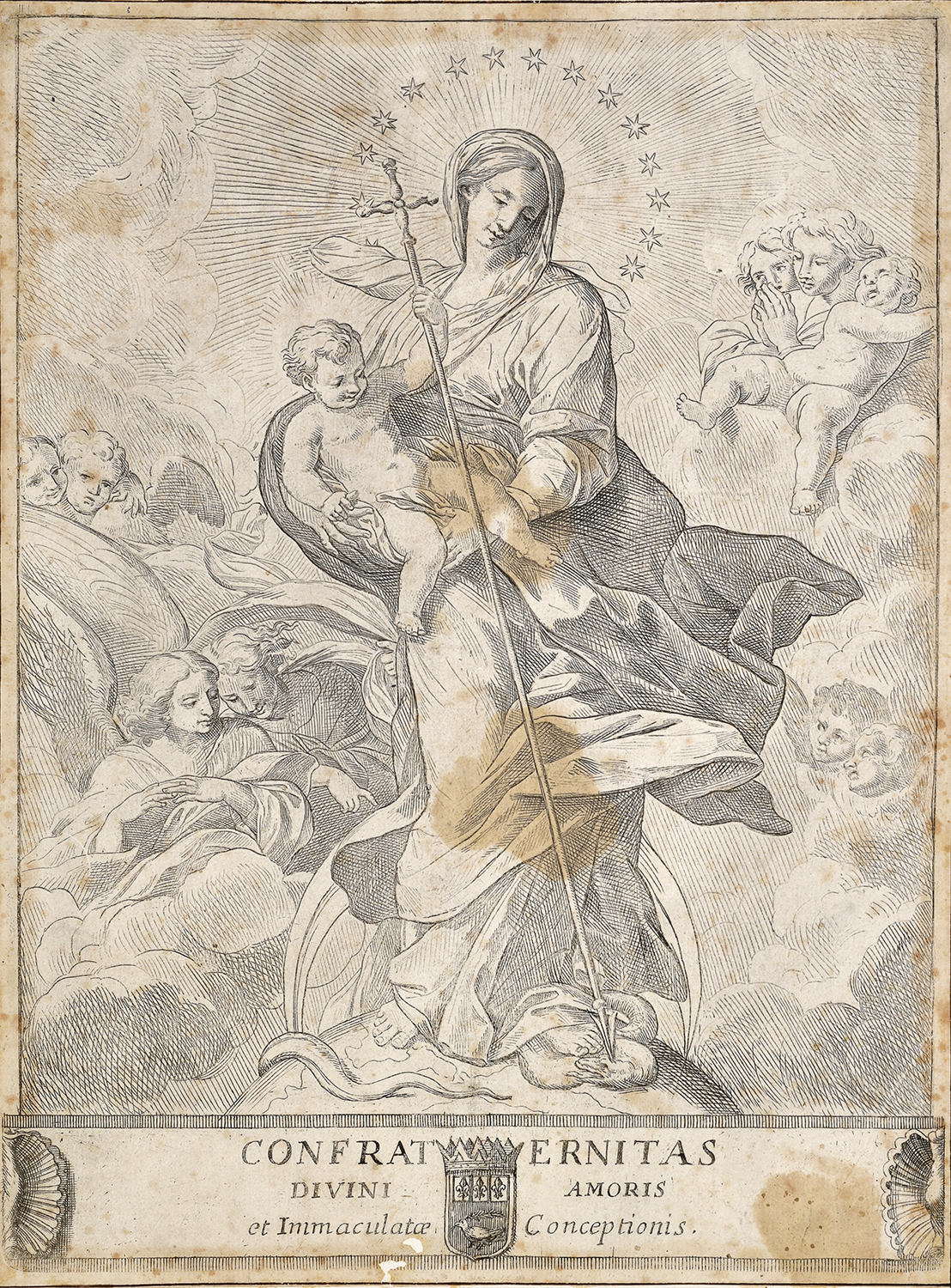
Attributable to Maratti himself, this print reproduces the composition of the renowned altarpiece he executed in 1663 for the De Sylva chapel in the Roman church of Sant’Isidoro. The work achieved immediate acclaim, as evidenced by the numerous engravings, copies, and derivations inspired by the original painting—including the exceptional calligraphic work dedicated by Ignazio Muligino to Grand Prince Ferdinando de’ Medici.

Saint Francis in Prayer
Ignazio Francesco Muligino (17th-18th century)
Gorizia, 1708
Rome, Museo Francescano, III, A 51
Facsimile
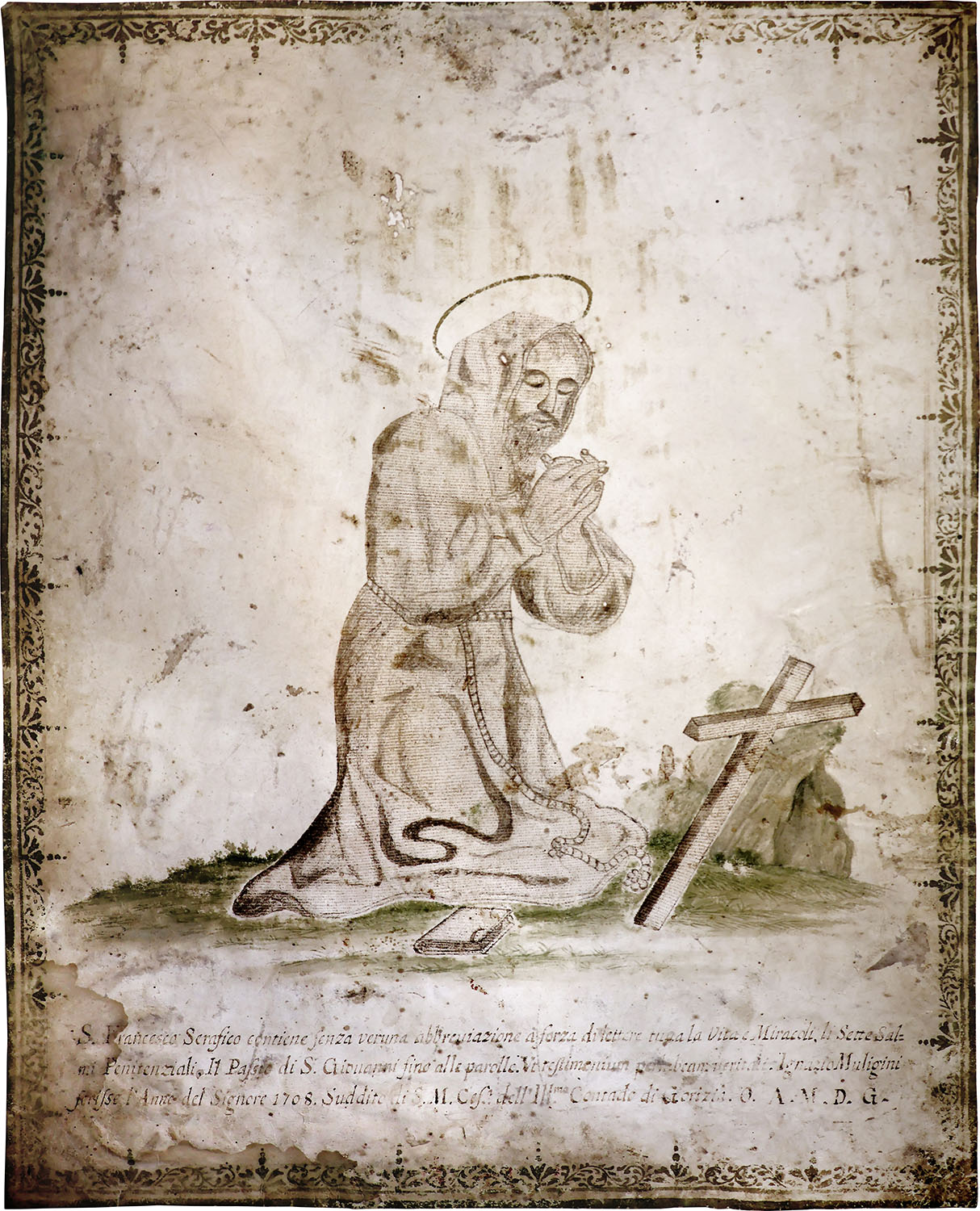
Likely by Muligino’s own hand, the drawing shows a more modest artistic quality than other calligrams, where he often collaborated with established artists. The figure of the saint is intricately woven with micro-inscriptions of texts taken from St. Bonaventure’s Legenda Maior, the seven penitential psalms, and the Passion according to John. As indicated by the inscription at the bottom, the calligram was executed in 1708 by Ignazio Muligino—an imperial subject of the County of Gorizia—under the motto ‘O.A.M.D.G.’ (Omnia Ad Maiorem Dei Gloriam).

La dioptrique oculaire, ou, La theorique, la positive et la mechanique de l’oculaire dioptrique en toutes ses especes
Chérubin d’Orléans (1613-1697)
Paris, 1671
Florence, Biblioteca del Museo Galileo, MED 2162
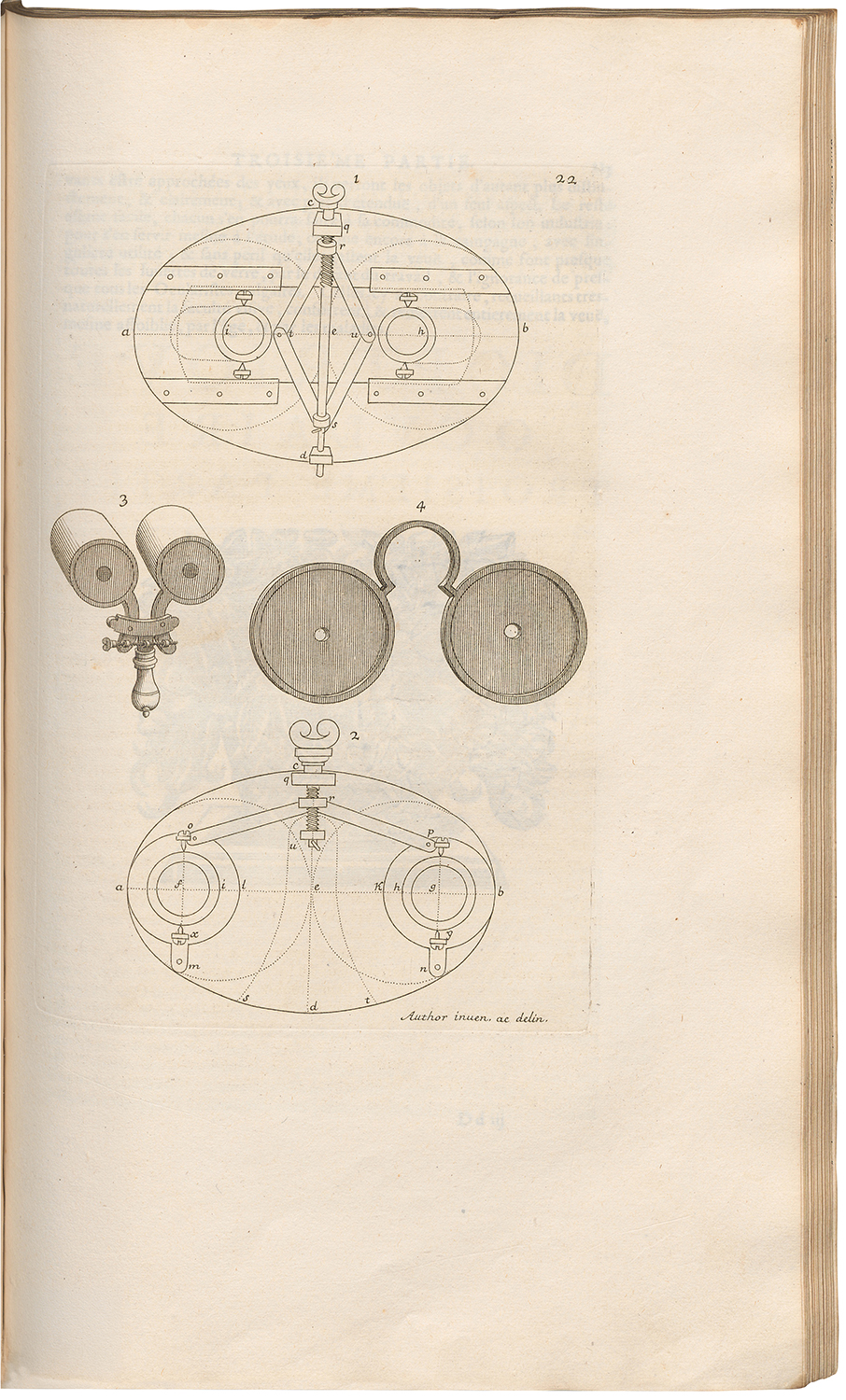
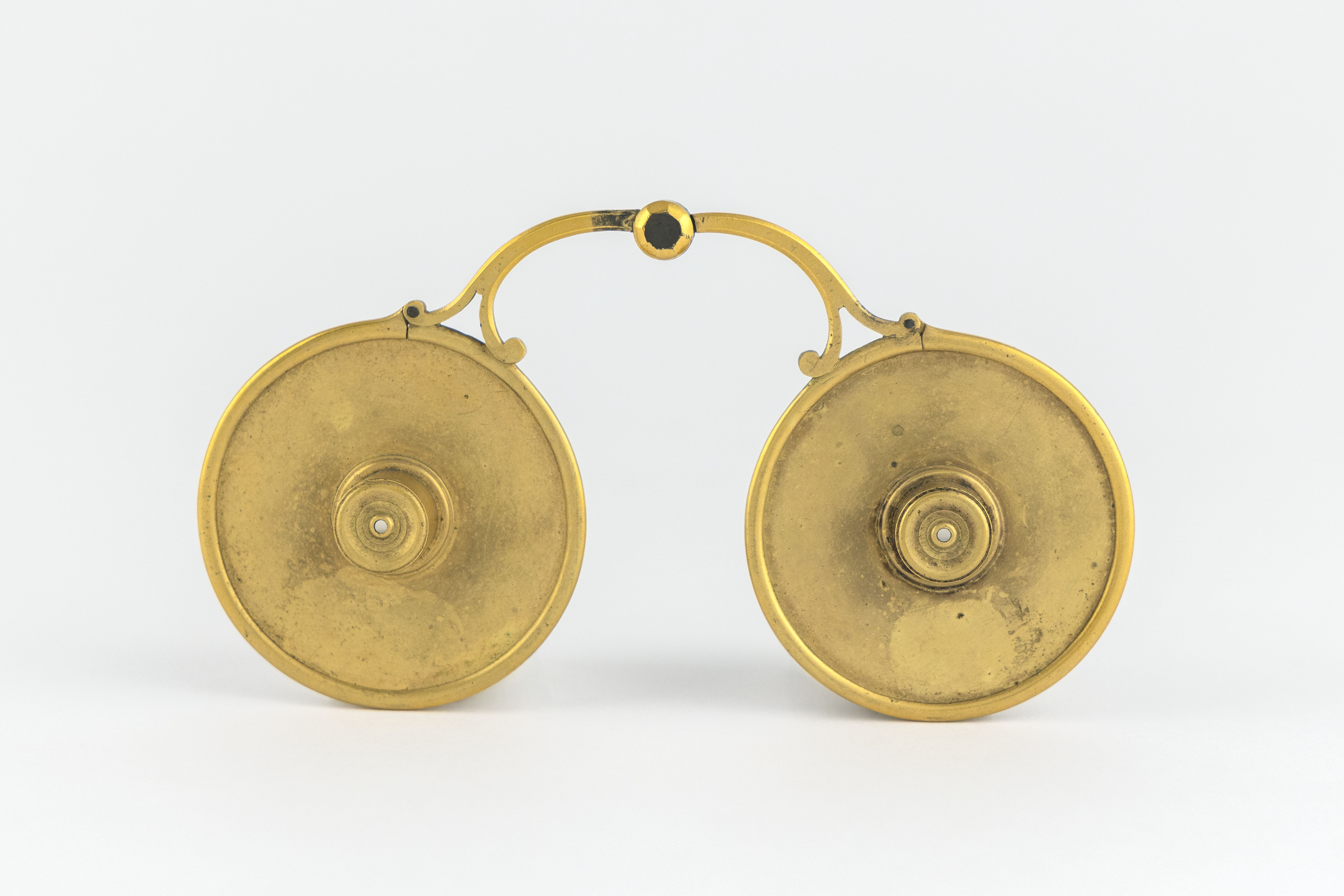
The treatise by the Franciscan Chérubin d’Orléans (Michel Lasséré) is dedicated to dioptrics and belongs to the intense field of studies on lens properties stimulated by the widespread use of the telescope and microscope. The illustrated instruments include the so-called ‘oculaire dioptrique’, an adjustable binocular device for viewing minute objects, and with potential applications for micro-writing. Also remarkable are the stenopeic spectacles, designed to aid the reading of minute characters.

Stenopeic spectacles
Chérubin d’Orléans (1613-1697)
17th century
Florence, Museo Galileo, inv. 2581
Stenopeic spectacles consisting of two brass discs fitted with short, perforated tubes. The holes serve to restrict the pupillary diametre, thereby enhancing visual acuity. Chérubin d’Orléans, who claimed the invention as his own, described them in his treatises La dioptrique oculaire (1671) and La vision parfaite (1677). The ‘oculaire optique’—as he calls it—is lensless and represents the simplified version of the ‘oculaire dioptrique’, a small pair of binoculars equipped with lenses for observing both distant objects and small, very close ones—a sort of wearable microscope held like opera glasses.